Let’s have a real chat for a minute. We’ve all been there. You finish cooking a fantastic, from-scratch meal for your family. The food was a hit, but your kitchen looks like a bomb went off. And right there in the middle of it all is your gas stove, covered in a layer of grease, splattered sauce, and those mysterious burnt-on bits that seem to have welded themselves to the surface.
You look at it, sigh, and think, “I’ll deal with that tomorrow.”
But tomorrow turns into the next day, and soon you have a sticky, grimy stove that feels like a chore you just can’t face. I get it. I’ve spent years avoiding that very task.
But here’s the good news I’ve learned: cleaning your gas stove doesn’t have to be a nightmare. You don’t need a chemistry degree or a cabinet full of expensive, harsh chemicals. With a few simple tricks and things you probably already have in your pantry, you can make that stove shine like it’s straight out of the showroom. And honestly, there’s something deeply satisfying about seeing it sparkle again.
First Things First: Let’s Gather Your “Weapons”
Before we start, let’s raid your kitchen. You won’t need to run to the store for this.
Your Cleaning Dream Team, Hiding in Your Cabinets:
- Baking Soda: This is your MVP. It’s a gentle scrubber that cuts through grease without scratching your stove. It’s a miracle worker, truly.
- White Vinegar: This is your degreaser. It’s like kryptonite for sticky, greasy messes.
- Dish Soap: Good old Dawn or whatever you have. It’s designed to cut through grease on dishes, and it works the same magic on your stove.
- A Lemon (Optional): Great for a fresh scent and a little extra grease-cutting power.
Your Tools of the Trade:
- Microfiber Cloths: These are the best. They don’t leave lint and they grab onto grease.
- An Old Toothbrush: Don’t throw these away! They are perfect for scrubbing the tiny nooks and crannies around the burners.
- A Small Bowl for mixing.
- A Spray Bottle for your vinegar.
A Super Important Safety Note!
Please, please make sure your stove is completely cool before you start. I once made the mistake of trying to wipe down a still-warm stove and just smeared grease everywhere. And if you have sensitive skin, it’s not a bad idea to wear rubber gloves.
The Step-by-Step, “You-Can-Do-This” Deep Clean
This is for when you’re ready to really tackle the mess. Put on some music, and let’s get to it.
Step 1: Take It All Apart
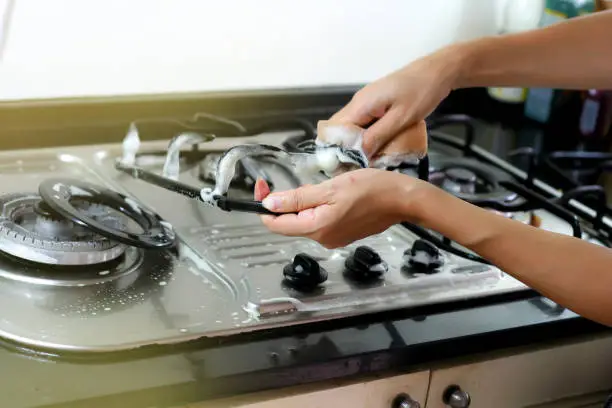
Carefully lift off the grates and the little metal burner caps. Go ahead and put them right in your sink. Don’t be intimidated! They are meant to be removed.
Step 2: Give Them a Good Soak
This step is a game-changer. Fill your sink with the hottest water you can get from your tap. Add a good glug of dish soap and about a half-cup of vinegar. Let those grates and caps soak while you work on the stovetop itself. Letting them soak for 20-30 minutes will loosen up most of the gunk, making your scrubbing job so much easier.
Step 3: Conquer the Stovetop Itself
Now, look at that bare stovetop. We can handle this.
Wipe Away the Crumbs:
First, just give it a quick wipe with a damp cloth to get any loose food or dust out of the way.
Make Your Magic Paste:
In your small bowl, mix a good amount of baking soda with just enough water to make a thick, spreadable paste. It should feel like toothpaste.
Slather It On:
Using your fingers or a cloth, spread this paste all over the stovetop. Really cover those greasy and stained areas. Don’t be shy! Let it sit for at least 15 minutes. You’re letting the baking soda do the hard work of pulling the grime up and out.
The Fizz of Victory:
Now, take your spray bottle of vinegar and spritz it all over the baking soda. Watch it fizz! That bubbling action is helping to break down the grease even more. Let it fizz for about 5 minutes.
The Final Scrub:
Take your cloth or a non-scratch sponge and start wiping. You’ll see the grime coming off easily. For any really stubborn, burnt-on spots, you can use the edge of a credit card or a plastic scraper to gently lift it off. Finally, wipe everything clean with a fresh, wet cloth.
By now, your soaking parts should be ready. Pull them out of the sink. Take your old toothbrush and give them a good scrub. You’ll be amazed how easily the gunk comes off after that soak. Rinse them well and dry them thoroughly with a towel before you put them back. This helps prevent rust.
Step 4: Finish the Grates and Caps
By now, your soaking parts should be ready. Pull them out of the sink. Take your old toothbrush and give them a good scrub. You’ll be amazed how easily the gunk comes off after that soak. Rinse them well and dry them thoroughly with a towel before you put them back. This helps prevent rust.
Step 5: The Final Touch
For a truly sparkling finish, do one last wipe of the whole stovetop with a cloth dampened with a little vinegar. This removes any last film and leaves it streak-free.
What If My Stove is Really Bad?
Maybe you’ve let it go for a while, or you just moved into a new place with a stove that has seen better days. Don’t worry, we’ve got a secret weapon.
For the grates that have years of baked-on grease, try the overnight bag method.
- Place the grates in a large, sealable plastic bag (a garbage bag works if you can tie it tightly).
- Add about a half-cup of ammonia. Be careful-use gloves and open a window! Seal the bag up tight.
- Leave it outside in your garage or on a balcony overnight. The ammonia fumes will loosen all that grease without you having to lift a finger to scrub.
- In the morning, open the bag carefully (don’t inhale the fumes!), pull out the grates, and you’ll find the grease wipes right off with a rag. Rinse them very, very well.
How to Keep It Clean Without Losing Your Mind
The deep clean is great, but the real secret is not letting it get that bad again.
- The “After-Cooking” Wipe: Get into the habit of giving the stovetop a quick wipe with a damp cloth after it has cooled down from cooking. It takes 30 seconds and prevents big messes.
- The Weekly Once-Over: Once a week, when you’re doing your other kitchen cleaning, just spray the stovetop and grates with a little vinegar and water and wipe them down. It keeps the deep clean from feeling so necessary.
A Few Questions You Might Have
“Can I use oven cleaner?”
I wouldn’t. It’s often too harsh and can damage the finish on your stovetop and the seals around the knobs. The baking soda and vinegar method is safer and works just as well, if not better.
“What about the knobs?”
If they pop off, just wash them in the soapy water with your grates. If not, a cloth with a little vinegar or rubbing alcohol will get them clean and remove any sticky residue.
“My burners are clogged!”
Once everything is cool, use a toothpick or a needle to gently poke through the tiny holes in the burners. This helps the gas flow evenly again for a better flame.
You Did It!
Look at that. You faced the mess and won. Your stove is clean, it’s safe, and it’s ready for your next cooking adventure. There’s a real pride that comes from maintaining your home, from tackling the jobs we put off.
So the next time you see those first few splatters, you’ll know exactly what to do. No more dread, just a quick wipe and the satisfaction of a kitchen that feels clean and loved. Now, go enjoy that clean stove. Maybe it’s time to cook a celebratory meal.