Top iron rich foods including heme and non-heme sources, iron absorption tips, and FAQs. Your complete 2025 guide to increasing iron levels naturally.
Why Iron Matters for Your Body
Iron is an essential mineral your body needs to:
Produce haemoglobin (for red blood cells)
Transport oxygen to organs and muscles
Support brain development and immunity
Prevent iron-deficiency anaemia
Low iron = low energy. That’s why a well-balanced diet rich in iron is non-negotiable.
Types of Iron in Food
There are two types of iron found in our diet:
1. Heme Iron
Found in animal-based foods
Absorbs easily in the body
Best for increasing iron levels quickly
Sources: Red meat, chicken, liver, fish, shellfish
2. Non-Heme Iron
Found in plant-based foods
Absorbs less efficiently, but still valuable
Needs Vitamin C to absorb better
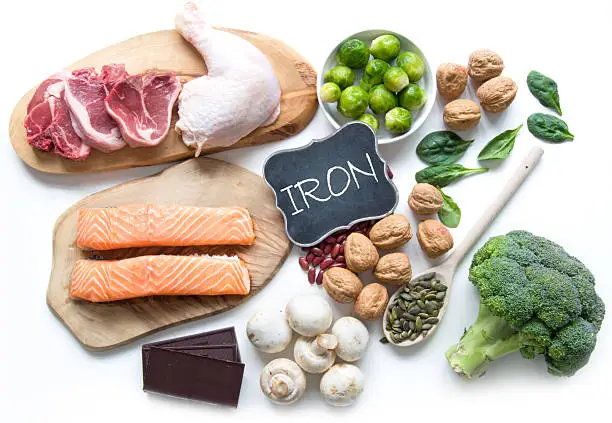
Top Iron Rich Foods List (2025)
| Food Item | Iron Content (per 100g) | Iron Type | Category |
|---|---|---|---|
| Beef liver | 6.5 mg | Heme | Animal |
| Clams | 28 mg | Heme | Seafood |
| Red meat (beef) | 2.6 mg | Heme | Meat |
| Chicken thigh | 1.3 mg | Heme | Poultry |
| Canned tuna | 1.0 mg | Heme | Fish |
| Cooked lentils | 3.3 mg | Non-Heme | Legume |
| Tofu (firm) | 5.4 mg | Non-Heme | Plant-based |
| Spinach (cooked) | 3.6 mg | Non-Heme | Leafy vegetable |
| Fortified cereals | Up to 18 mg | Non-Heme | Cereal |
| Pumpkin seeds | 8.8 mg | Non-Heme | Seed |
| Chickpeas | 2.9 mg | Non-Heme | Legume |
| Dark chocolate (70%) | 11.9 mg | Non-Heme | Snack |
Boost Iron Absorption Naturally
To help your body absorb non-heme iron, pair iron rich foods with:
Vitamin C sources: oranges, bell peppers, strawberries, broccoli
Avoid inhibitors during meals: tea, coffee, calcium supplements
🧠 Pro Tip: A bowl of lentils + a glass of orange juice = iron power combo.
Foods That Can Inhibit Iron Absorption
Limit the following when consuming iron rich meals:
Tea & coffee (contain polyphenols)
Dairy (calcium competes with iron)
Whole grains high in phytic acid
Some soy proteins
Who Needs More Iron?
Women (especially pregnant or menstruating)
Children and teenagers
Athletes and runners
Vegans and vegetarians
People recovering from surgery or illness
Signs of Iron Deficiency
Fatigue and weakness
Pale skin and cold hands
Dizziness or headaches
Shortness of breath
Brittle nails or hair loss
✅ Summary Table: Heme vs Non-Heme Iron
| Iron Type | Absorption Rate | Food Source Example | Best Absorbed With |
|---|---|---|---|
| Heme | 15–35% | Red meat, poultry, fish | On its own |
| Non-Heme | 2–20% | Beans, veggies, grains | With Vitamin C |
FAQ
Q1: What’s the best iron rich food for vegetarians?
A: Lentils, tofu, fortified cereals, spinach, and pumpkin seeds.
Q2: What’s the daily iron requirement?
Adult men: 8 mg
Women (19–50): 18 mg
Pregnant women: 27 mg
Q3: Can I get too much iron from food?
A: It’s rare unless you take supplements. Excess iron can harm the liver and heart. Always check with a doctor.
Q4: Does cooking in a cast iron pan help?
A: Yes! Cooking acidic foods in cast iron can add iron to your meal.
Q5: Should I take iron supplements?
A: Only if diagnosed with deficiency. Food first approach is safer and more balanced.
Final Thoughts
Iron is critical for your energy, immunity, and brain power. Whether you’re a meat lover or a plant-based eater, there’s a way to meet your iron needs naturally. Focus on variety, include Vitamin C, and know your body’s needs.